Posts

Showing posts with the label National

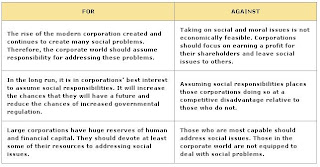
CSR - Advantages and Disadvantages

Image
With Indian government mulling making 'Corporate Social Responsibility' mandatory in the new Companies Bill, this issue has become ever more important for interviews.Have a read.

Sedition and Binayak Sen

What are the criminal charges impinging on free speech? In keeping with the reasonable restrictions allowed by the Constitution on free speech, there are criminal provisions against defamation, sedition, blasphemy, contempt of court and hate speech. The defence available against defamation is that the words in question should be substantially true and that they should have been uttered or written in the public interest. The plea of truth is allowed as a defence at least in theory against the contempt charge as well. The blasphemy provision is meant to penalize only those insults to religion that have been committed with a deliberate and malicious intention. The hate speech provisions often fall in the political domain, as they seek to punish those who deliver inflammatory speeches promoting enmity between different groups or prejudicing national integration. Mahatma Gandhi, who was himself convicted for sedition. Isn't the sedition provision introduced by the British contrary to...

Kerosene - Petroleum

Read it as an addendum to the article in the e-book How is kerosene produced?  Petroleum or crude oil is the liquid which comes straight out of the oil wells. This liquid is of little use because it is a mix of various hydrocarbons each having a different boiling point and ignition temperature and hence it is necessary to separate them for efficient use. The separation is done by a simple process known as fractional distillation. These hydrocarbons have progressive boiling points, so they can be easily separated by distillation — heating the oil and pulling out different products at different vaporizing temperatures. Using this method, liquefied petroleum gas (LPG), petrol, kerosene, diesel and lubricating oils are separated from each other. The residual is processed to extract asphalt, tar and wax. How are petroleum product prices determined in India? India has to import about 80% of its total crude oil consumption. Given the high volatility in international oil markets, the...

Go/No-go Mining Areas

No Go / Go Mining Area Classification Methodolog Canopy Density: This is the proportion of ground that is covered by the crown of trees. It is expressed in percentage of total area. 70% Canopy density:Very dense forest cover 40-70% Canopy density:Moderately dense forest cover 10-40% Canopy density:Open Forest Cover Gross Forest Cover (GFC) : Calculated on the basis of total area covered by canopy. Weighted Forest Cover (WFC) : (Very dense forest cover X 0.85) + (Moderately dense forest cover X 0.55) + (Open Forest Cover X 0.25)  Based on above calculations, Go/No-go areas are decided as follows: GO Area: If WFC is 10% or less and GFC is 30% or less NO GO Area: If WFC is 10% or GFC is more than 30%

JPC vs PAC

Parliament is the chief communication link between the government and the people. Close contact and an intimate rapport between the two is the quintessence of parliamentary democracy. Parliament belongs to the people and not to MPs or parties. People must have access to Parliament. Unfortunately, there is a tremendous disconnect between the two. Things get worse when both Houses do not function and are shut against the people. ·          Clearly, both the government and the Opposition are equally responsible for the ugly impasse. There was an unnecessary, illegitimate and irrational tug of war in the name of the people. But the people are nowhere in the picture. As usual, on both sides, political considerations and calculations of gain and loss have the upper hand. Perhaps, there is an unsaid long-term political concern before the government and the Opposition. Both are eyeing the 2014 general elections. The Opposition would like to drag the m...

Railways - Facts & Problems

Fares ·          A second class sleeper berth costing a mere Rs 400 for a 1600-km journey, or just 25 paise for a kilometre, Indian Railways provides perhaps the cheapest rail transport in the world! ·          This drops down to only half if one chooses to go by unreserved accommodation ·          The passenger tariff has remained so for almost the last one decade while successive Railway Ministers, in a bid to maintain a populist image, have studiously avoided any meaningful hike. However, in order to balance the budget, freight tariff has seen repeated hikes, mostly mid-season, away from the media attention associated with the Railway Budget, leading to a progressive loss of market share. ·          Currently, freight tariff for coal — which forms almost half the goods railways carry — is about three times that of US Class-...